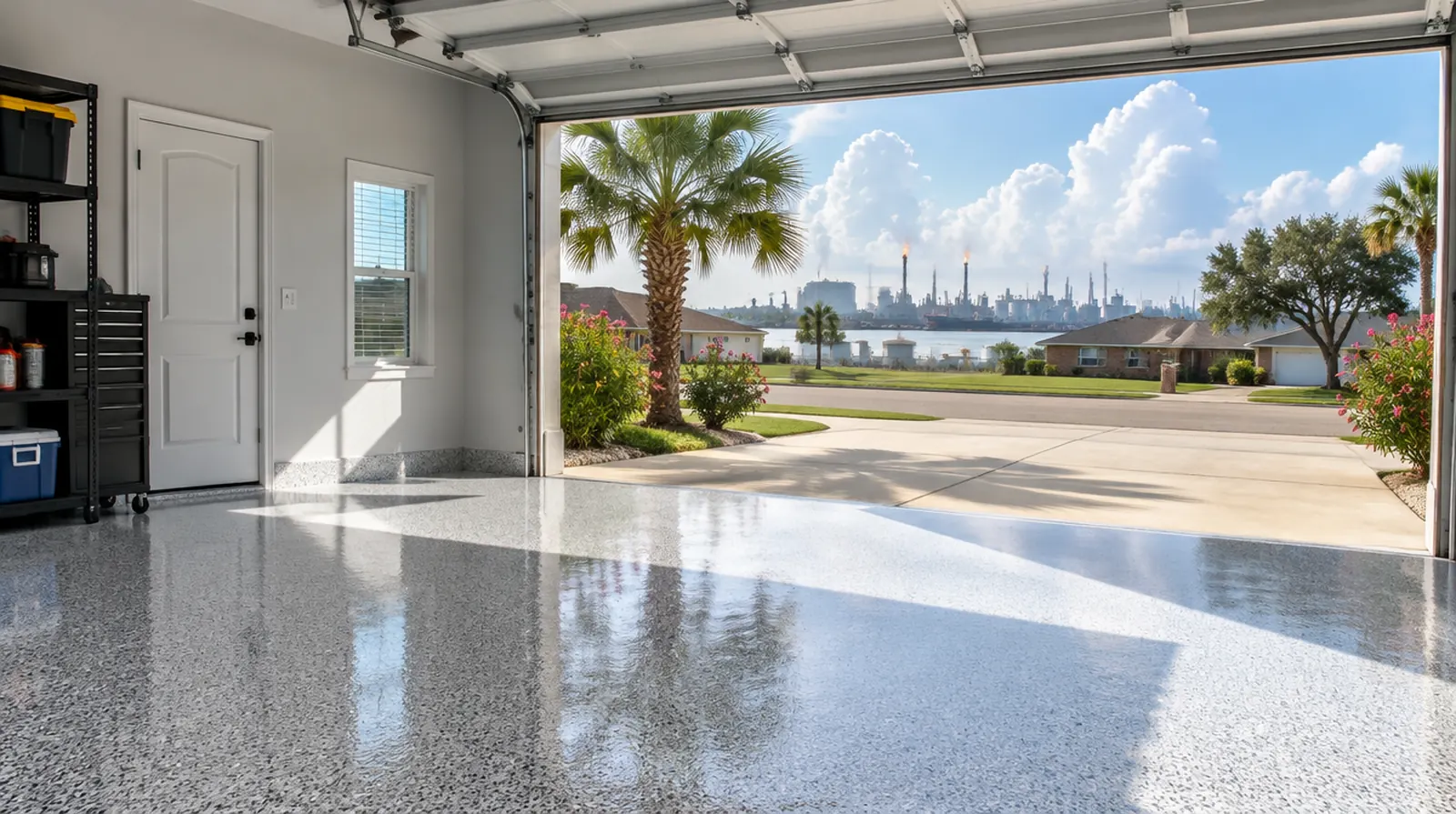
What polyaspartic is
Polyaspartic coatings belong to the polyurea family. They cure much faster than epoxy, stay clear in sunlight and remain somewhat flexible, which helps them handle temperature swings. Many installers use polyaspartic as the topcoat over an epoxy base. We also install full polyaspartic systems when speed and UV resistance matter most.
Why speed matters
Traditional epoxy systems can take several days before you can drive on them. A polyaspartic system can often be installed in a single day, with foot traffic that evening and vehicles back in a day or two. For homeowners who need their garage, and for businesses that cannot close for long, that difference is significant.
Sun and heat
Garages with west-facing doors, screened porches and covered patios get a lot of sunlight. Standard epoxy can yellow when exposed to UV over time. Polyaspartic topcoats resist yellowing and keep colors true. They also resist hot tire pickup well, which helps during long summers.
Humidity is still a factor
Polyaspartic reacts with moisture in the air, so humid conditions shorten working time. Our crew mixes smaller batches, works in coordinated sections and watches the dew point so the coating flows out smoothly. On slabs with high moisture readings, we pair a vapor-blocking epoxy primer with polyaspartic base and top coats for the best of both.
A typical one-day install
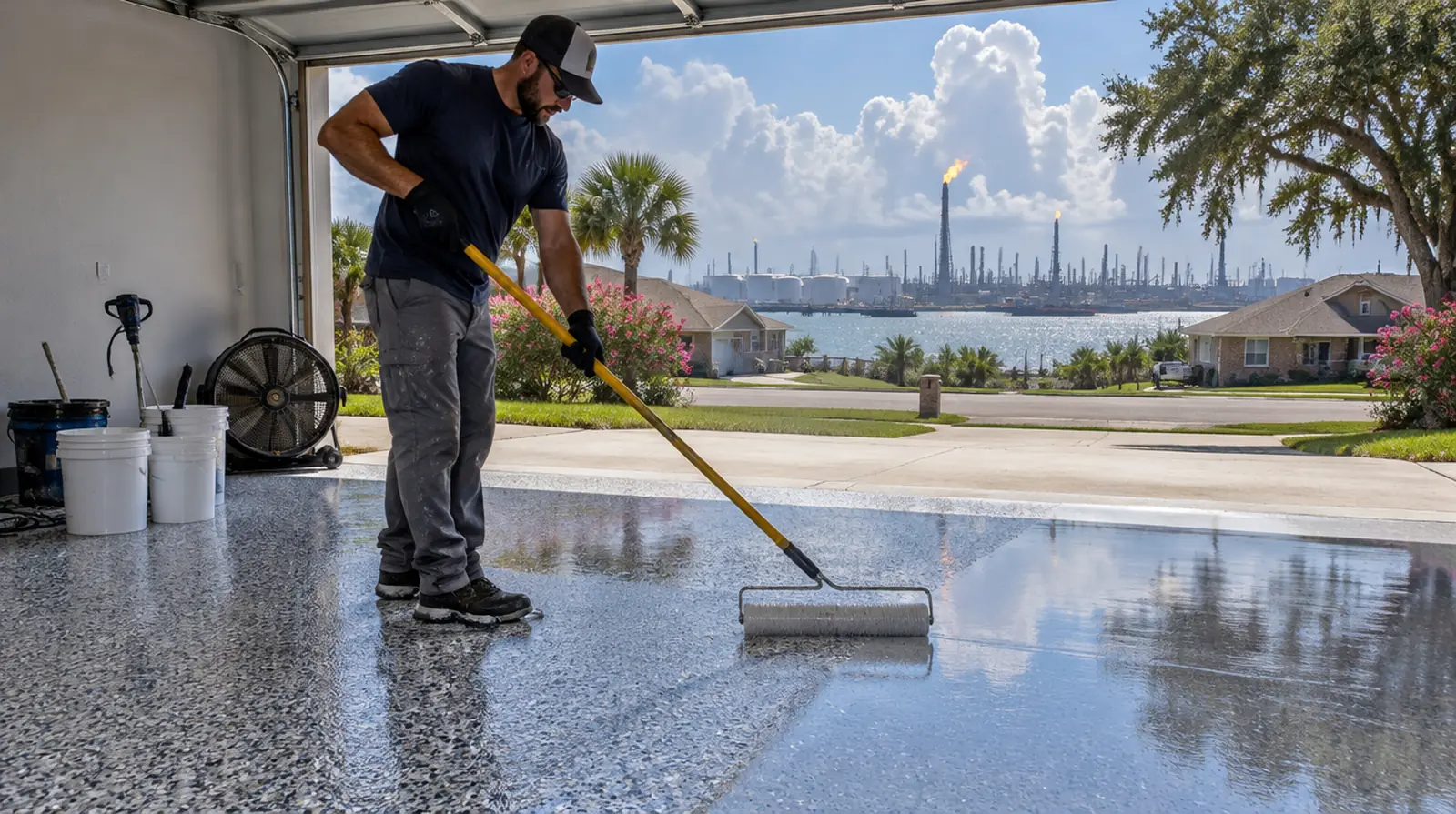
Morning starts with grinding and dust collection. Then we repair cracks, apply the base coat and broadcast flake. After a short cure, we scrape and vacuum loose chips and roll on the clear topcoat. By evening, the floor is sealed and ready for light foot traffic the next day. Larger or more damaged floors may need a second day.
Where it works well
Polyaspartic is a strong choice for garages, covered patios, porches, pool house floors, showrooms, retail spaces and commercial kitchens where downtime is costly. It is also popular for rental properties because it can be installed between tenants without delaying a move-in.
Comparing it to epoxy
Epoxy builds thickness well and bonds strongly, but it cures slowly and can yellow. Polyaspartic cures fast and resists UV, but it needs experienced hands because of the short working time. Hybrid systems combine an epoxy primer or base with polyaspartic topcoats. We recommend the mix that fits your space, budget and schedule.
Care and maintenance
Rinse off sand, mop with mild soap and avoid leaving harsh chemicals on the surface. Satin finishes hide fine scratches better than high gloss. If traffic areas dull after many years, a light scuff and new topcoat restores the look.
Common questions
Can polyaspartic go over an old coating? Usually not without grinding it off first, because the new layer is only as good as the bond beneath it. Is it more expensive? Material costs more than standard epoxy, but saved downtime often makes up the difference. Will it be slippery? We add texture or anti-slip aggregate to match how you use the floor.
Get a fast-cure quote
Tell us your timeline and the size of the space. We will test the slab and recommend the quickest system that still protects the floor for the long haul.
Porches and pool houses
Screened porches and pool houses get sun, splashing water and bare feet. A polyaspartic system with fine texture stays comfortable, resists fading and rinses clean.
Every quote lists primer, coats, colors and cure times in plain terms.
Get a polyaspartic quote
Call (409) 916-7381 for a free estimate.