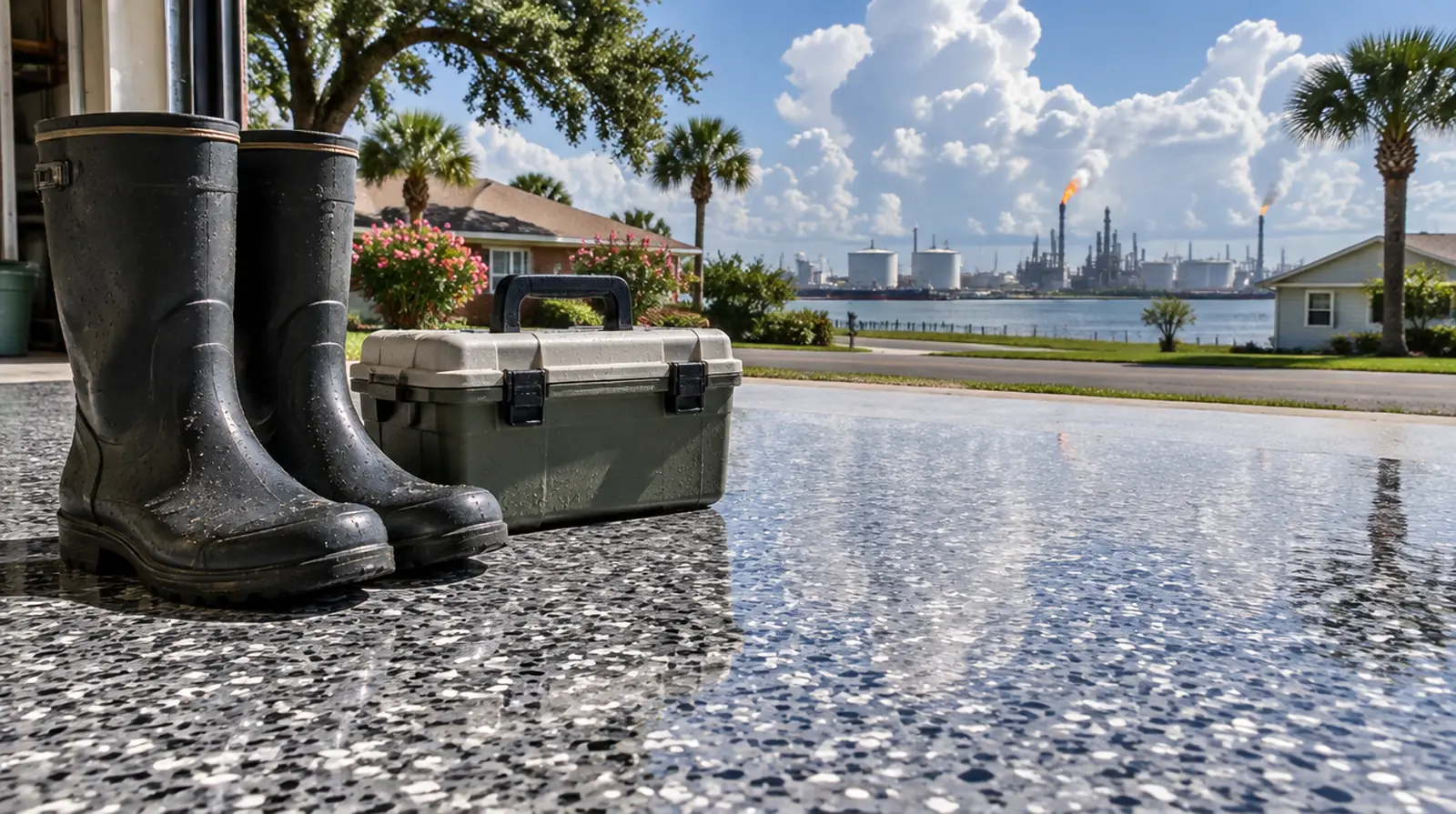
What a flake floor is
A flake system starts with a pigmented epoxy or polyaspartic base coat. While it is still wet, we broadcast colored vinyl chips across the whole surface until no base color shows through. After it cures, we scrape off loose chips and apply one or two clear topcoats. The result is a thick, textured floor with a speckled look similar to granite. It is forgiving, durable and easy to maintain, which is why it is the most requested system for local garages.
Why it suits this climate
Fine beach sand, muddy boots and drips from boats and trailers show up instantly on a solid-color floor. The varied chips camouflage that daily mess so the garage looks clean between washes. The texture also gives your shoes something to grip on mornings when humidity leaves the floor a little damp. Combined with a vapor-blocking primer, a flake floor holds up well on slabs that would ruin a painted surface.
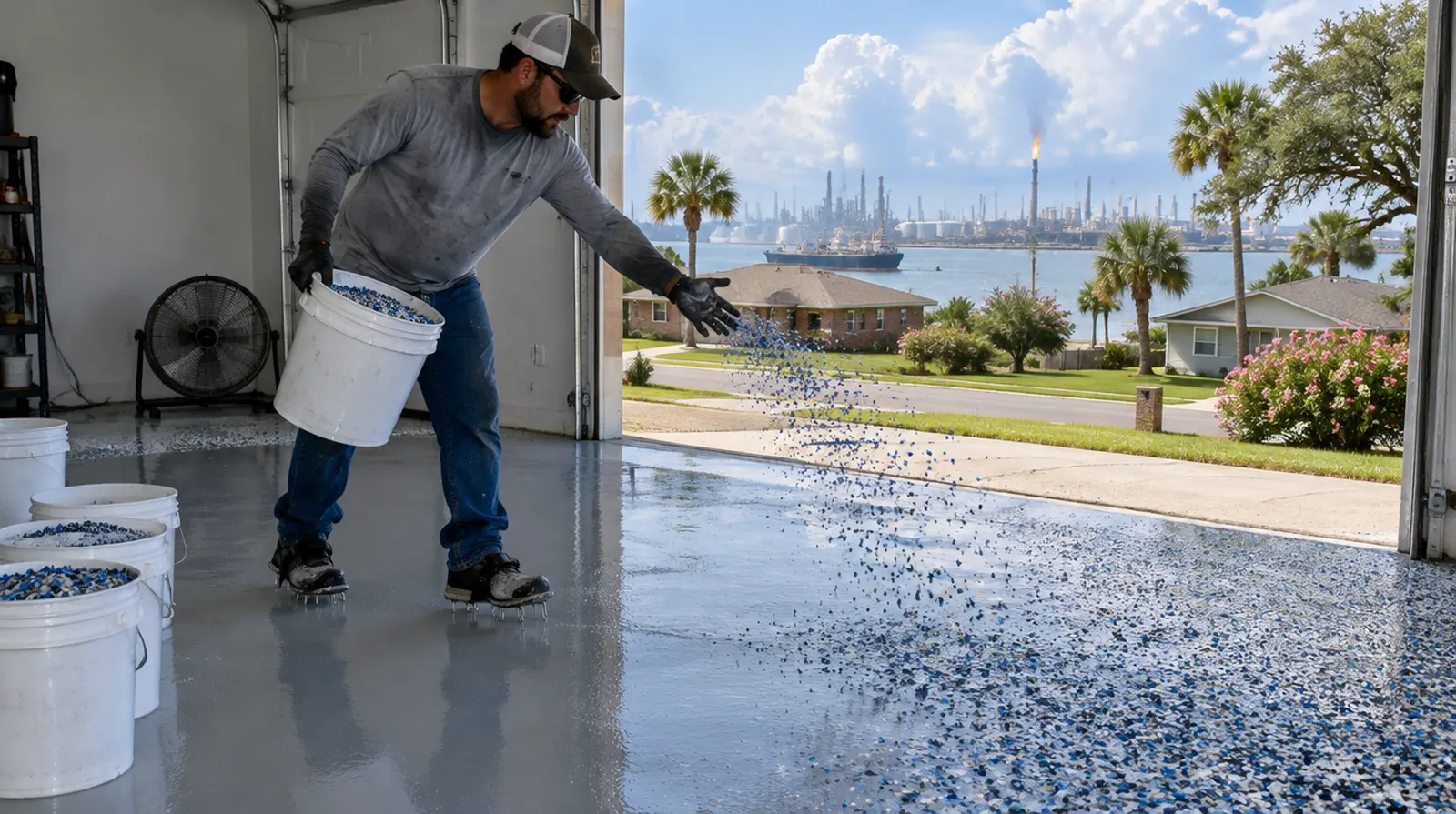
Full broadcast versus partial
Some installers offer a light scatter of flakes over a solid base to save material. It looks fine at first, but the thin base can wear through, and the floor shows dirt more readily. We recommend a full broadcast because it adds thickness, improves wear resistance and gives a more uniform appearance. If you want a lighter look, we can adjust the blend rather than thin out the system.
Chip size and blends
Quarter-inch chips are the standard choice for garages. Smaller chips create a tighter, more granite-like look, which works well in kitchens, laundry rooms and retail spaces. Popular blends include gray and white, tan and brown, black and silver and blue-gray coastal mixes. We carry sample boards so you can see how each blend looks next to your cabinets and walls.
Topcoat options
Clear polyaspartic topcoats resist yellowing in the sun and cure quickly. Polyurethane topcoats are tough and chemical resistant. We can adjust gloss from high shine to satin. Satin hides scratches and reduces glare when afternoon sun pours through the open door.
Where flake works best
Beyond garages, flake floors are a smart choice for laundry rooms, mudrooms, screened porches, workshops, gyms, locker rooms, break rooms and pet areas. Businesses use them in auto service bays, small warehouses and storage units because the speckled surface keeps looking good under heavy use.
Preparation still matters most
Flake hides a lot, but it cannot hide a weak bond. We diamond grind every slab, repair cracks and test for moisture before priming. Skipping those steps is why some flake floors peel at the edges or blister in the middle of the bay.
Daily care
Sweep or blow out sand, rinse with a hose and mop with a mild cleaner. Avoid harsh acids and degreasers left to sit. Clean oil drips promptly. The textured surface may need a deck brush in heavily used areas, but it does not require waxing or special treatments.
Longevity
With proper prep and sensible care, a full-broadcast flake floor can look good for well over a decade. Worn traffic areas can be lightly scuffed and recoated with a fresh clear topcoat, which renews the shine without starting over.
Questions to ask before hiring
Ask any installer whether they grind or etch, whether they test for moisture, whether the flake is full broadcast and which topcoat they plan to use. Their answers will tell you more about the finished floor than the price alone.
Get a flake floor quote
Call (409) 916-7381 for a free estimate.