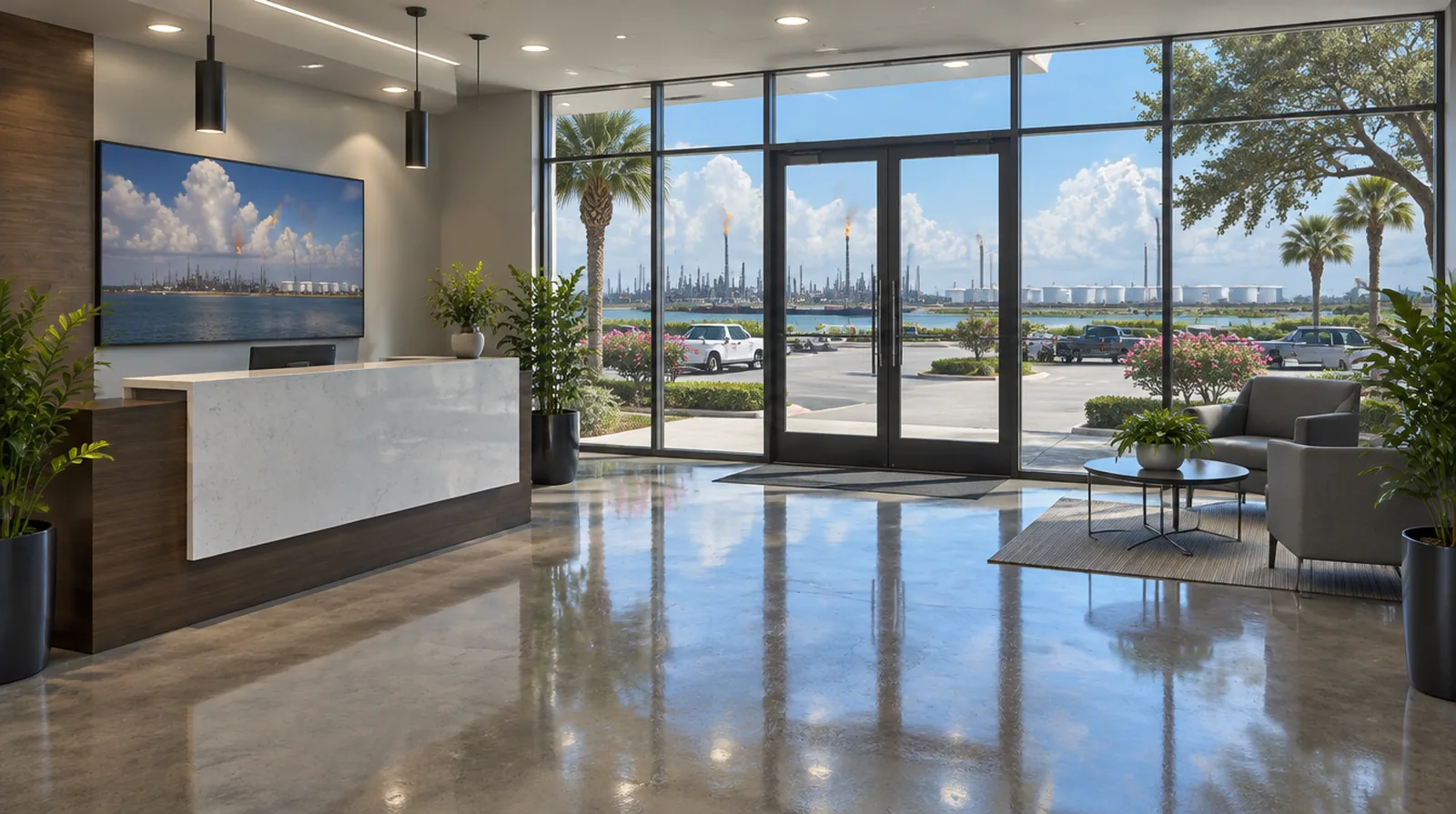
What polished concrete is
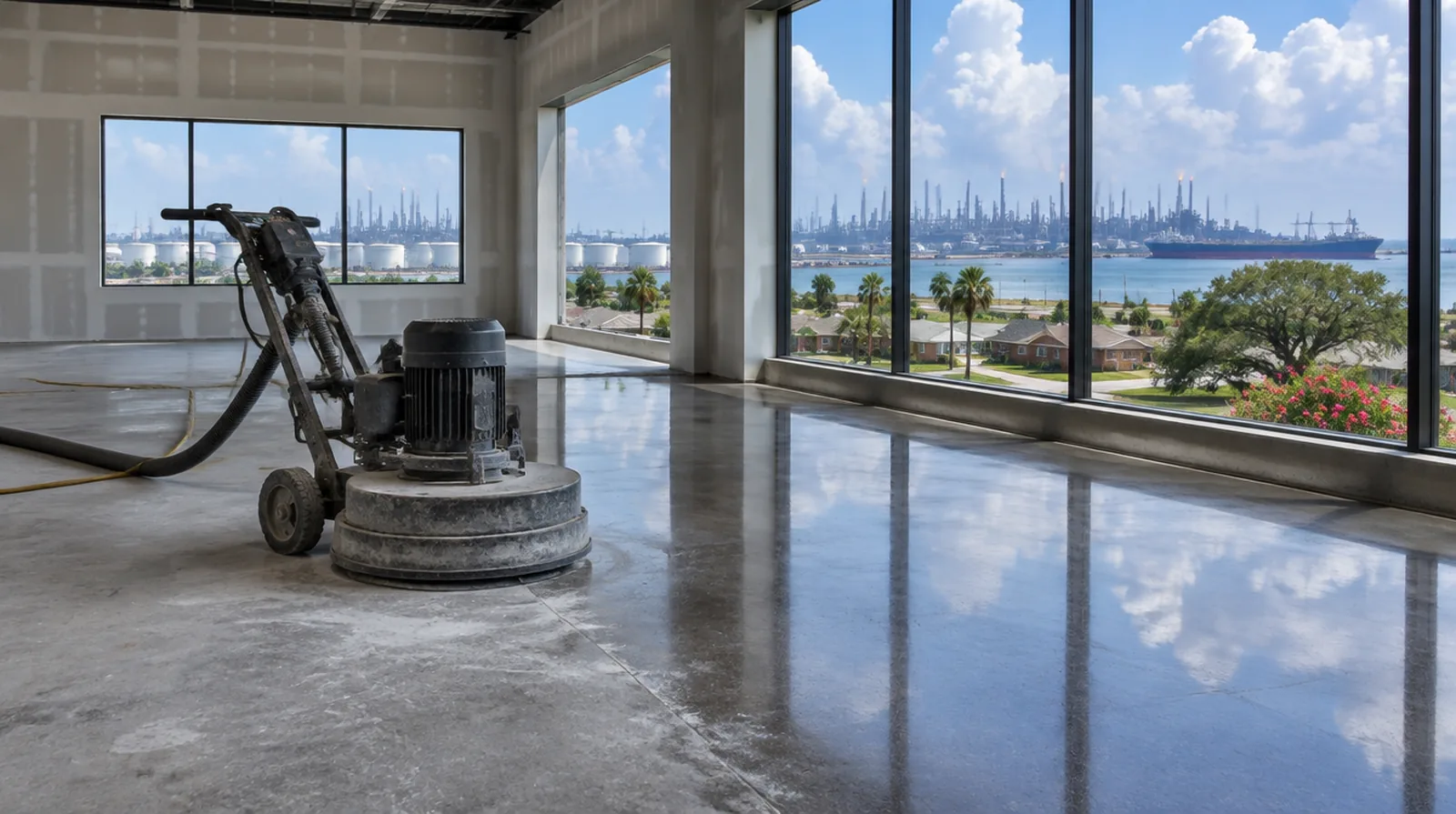
Polishing is a mechanical process. We grind the slab with progressively finer diamond tools, from coarse metal-bond segments to fine resin pads, until the surface becomes smooth and reflective. Along the way, we apply a densifier that hardens the concrete and a guard that improves stain resistance. There is no coating to peel because the shine is the concrete itself.
Why it makes sense here
Polished concrete breathes. Unlike thick coatings, it allows moisture vapor to pass through without blistering, which makes it a strong choice for slabs with ongoing moisture. It also cleans up well after flooding, resists mildew and avoids the warping and mold problems that can affect wood, laminate and carpet in humid buildings.
Levels of shine
Polished floors range from a low satin sheen to a high-gloss mirror finish. Low sheen works well in warehouses and industrial spaces. Medium shine suits offices, schools and retail. High gloss gives showrooms and lobbies a dramatic look. We can also choose how much aggregate to expose, from a smooth cream finish to a salt-and-pepper look or full stone exposure.
Adding color
Dyes and stains can add warm browns, cool grays, blues or custom colors. We can create borders, logos or zones for different areas. Color penetrates the concrete rather than sitting on top, so it wears well.
Where it fits
Polished concrete works in retail stores, offices, schools, churches, warehouses, restaurants, breweries, gyms and homes. Many homeowners choose it for open living areas, especially in slab homes, because it is easy to clean and stays cool in summer.
Maintenance
Daily dust mopping and periodic damp mopping with a neutral cleaner keep the floor looking good. There is no stripping or waxing. Over time, high-traffic areas may need a light burnishing or reapplication of guard. Compared with vinyl tile, carpet or coatings, lifetime maintenance costs are low.
Working with existing slabs
Older slabs may have patches, cracks, adhesive residue or uneven areas. We remove old flooring and adhesive, repair what makes sense and discuss how the finished floor will look. Some character is part of polished concrete, and many clients appreciate the history in an older slab.
New construction
When a building is going up, polishing the slab early can save time and produce a more uniform result. We coordinate with builders so the floor is protected during the rest of construction.
Sustainability
Polishing uses the concrete you already have, avoiding extra flooring materials and adhesives. Reflective floors can brighten interiors and reduce lighting needs. For many building owners, that efficiency and long life cycle make polished concrete an easy decision.
Get a polishing estimate
Tell us about the space, how it is used and the look you want. We will assess the slab and recommend a polish level and finish that fit your goals.
Indoor air and allergies
Polished concrete does not trap dust, pollen or mildew spores the way carpet does, and it does not off-gas like some flooring products. For families with allergies and businesses focused on healthy indoor air, that is a real benefit in a humid climate.
Churches and community halls
Fellowship halls see events, tables, chairs and spills every week. Polished concrete handles it all and cleans up quickly after a busy weekend, without stripping and waxing.
We also provide a simple care sheet so staff or family members know which cleaners to use and which to avoid.
Get a polishing estimate
Call (409) 916-7381 for a free estimate.