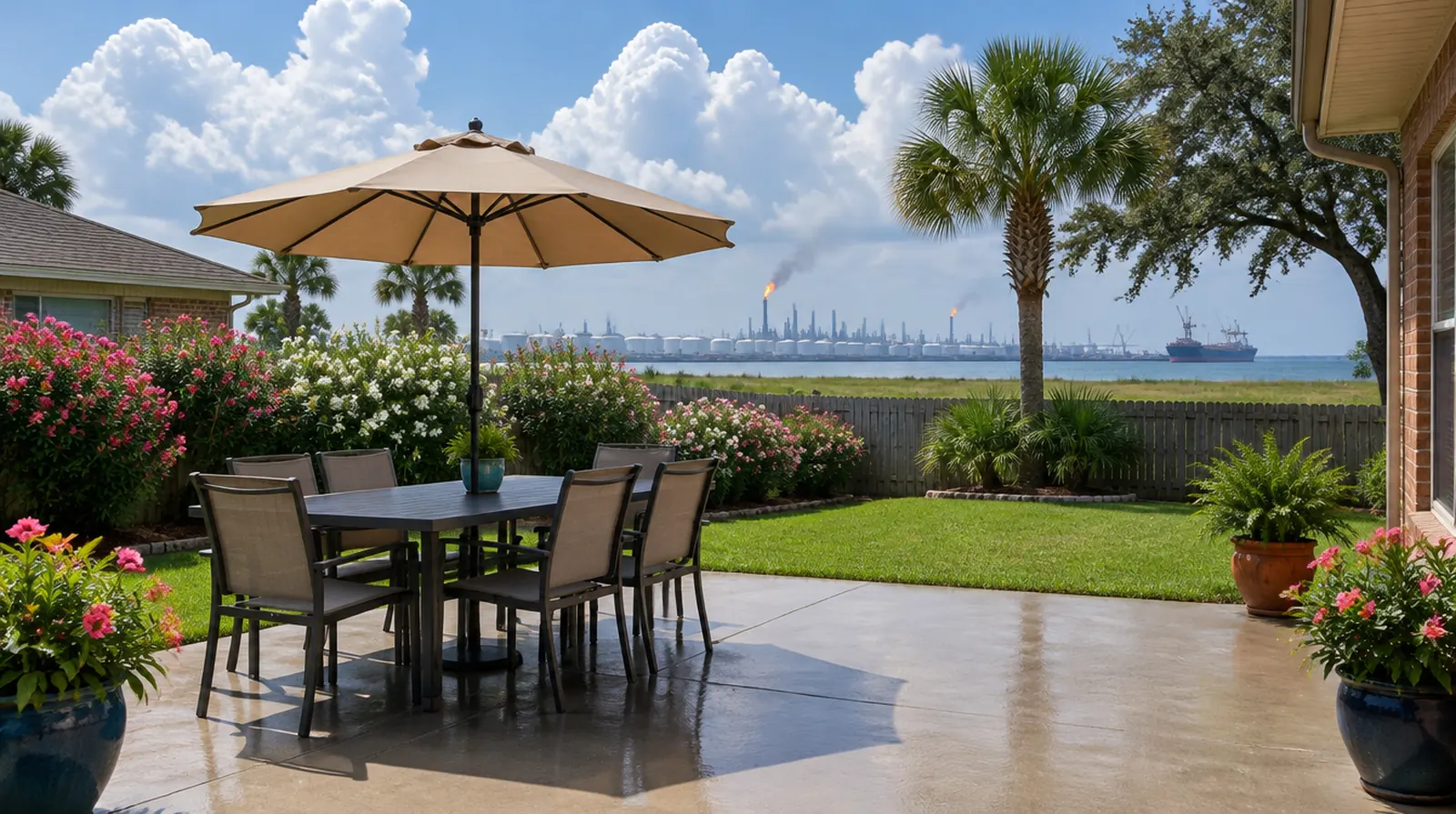
Why outdoor concrete needs help
Constant humidity and shade let mildew and algae grow on patios, walks and pool decks, leaving dark streaks and slippery spots. Salt air settles and draws moisture into the surface. Rust from furniture and irrigation water stains concrete orange. Hot sun bleaches color. Sealing does not stop nature completely, but it slows staining, reduces water absorption and makes cleaning far easier.
Our process
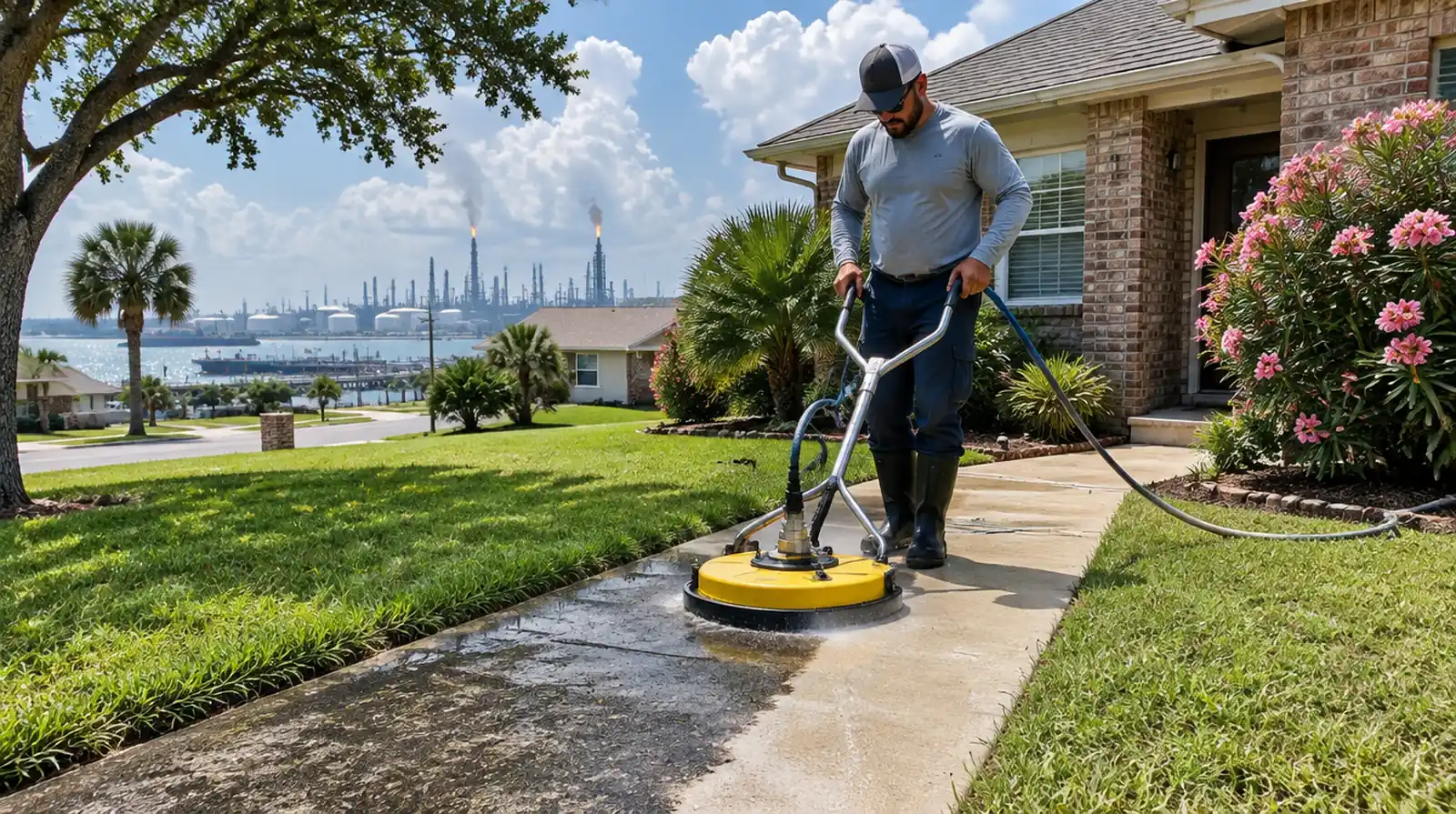
We start with a thorough cleaning. Surface cleaners and pressure washing remove dirt, mildew and loose debris. Stains get targeted treatments, such as rust removers or degreasers. We repair cracks and joints where needed. Once the concrete is dry, we apply the sealer that best fits the surface and the look you want.
Choosing a sealer
Penetrating sealers soak into the concrete and react inside the pores. They do not change the look much and resist foot traffic well. Topical acrylics sit on the surface, deepen color and add a sheen, but they wear in high-traffic areas and need periodic reapplication. On shaded, damp surfaces, breathable penetrating products usually perform better because they let moisture escape.
Pool decks
Pool decks need grip, heat resistance and protection from chlorine and salt systems. We clean, treat stains and apply sealers that keep traction. For textured or sprayed decks, we can refresh color and seal to restore the original look.
Porches and entries
Front porches and entry slabs set the first impression. Sealing helps them resist muddy shoes, rain splash and planters that leave rings. We can add color-enhancing sealers that make exposed aggregate or stamped concrete look fresh.
Stamped and decorative concrete
Stamped patios often fade and dull as the original sealer wears off. Cleaning and resealing brings back color and depth. If the old sealer has turned white or cloudy from trapped moisture, we strip it and apply a breathable product.
How often to reseal
Penetrating sealers can last several years. Topical sealers in sun and traffic may need refreshing every two to three years. We give you a realistic schedule based on product, exposure and use.
Care between sealings
Rinse surfaces regularly, clean up leaves and organic debris that hold moisture and address rust and oil stains quickly. Keep irrigation from spraying directly on concrete when possible.
Combining projects
Many homeowners seal patios, walks, porches and driveways together, which costs less than separate visits and gives the property a consistent look.
Request a sealing quote
Send photos of the surfaces and tell us about any stains or mildew. We will recommend a cleaning plan and sealer for each area.
Rust and fertilizer stains
Well water and some irrigation systems leave orange rust marks on patios and walks, and granular fertilizer can stain concrete when it gets wet. We treat these stains with specialty cleaners before sealing so they are not locked under the new finish. Afterward, adjusting sprinkler heads and sweeping up fertilizer spills keeps the problem from returning.
Side yards and garage aprons
Narrow side yards and the apron in front of the garage collect runoff and grime. Including them in the project protects more of the property and gives everything the same clean look. It also costs less than scheduling a separate visit later.
We also explain which surfaces can wait and which need attention now, so you can spread the work over time if your budget calls for it.
Get a sealing quote
Call (409) 916-7381 for a free estimate.