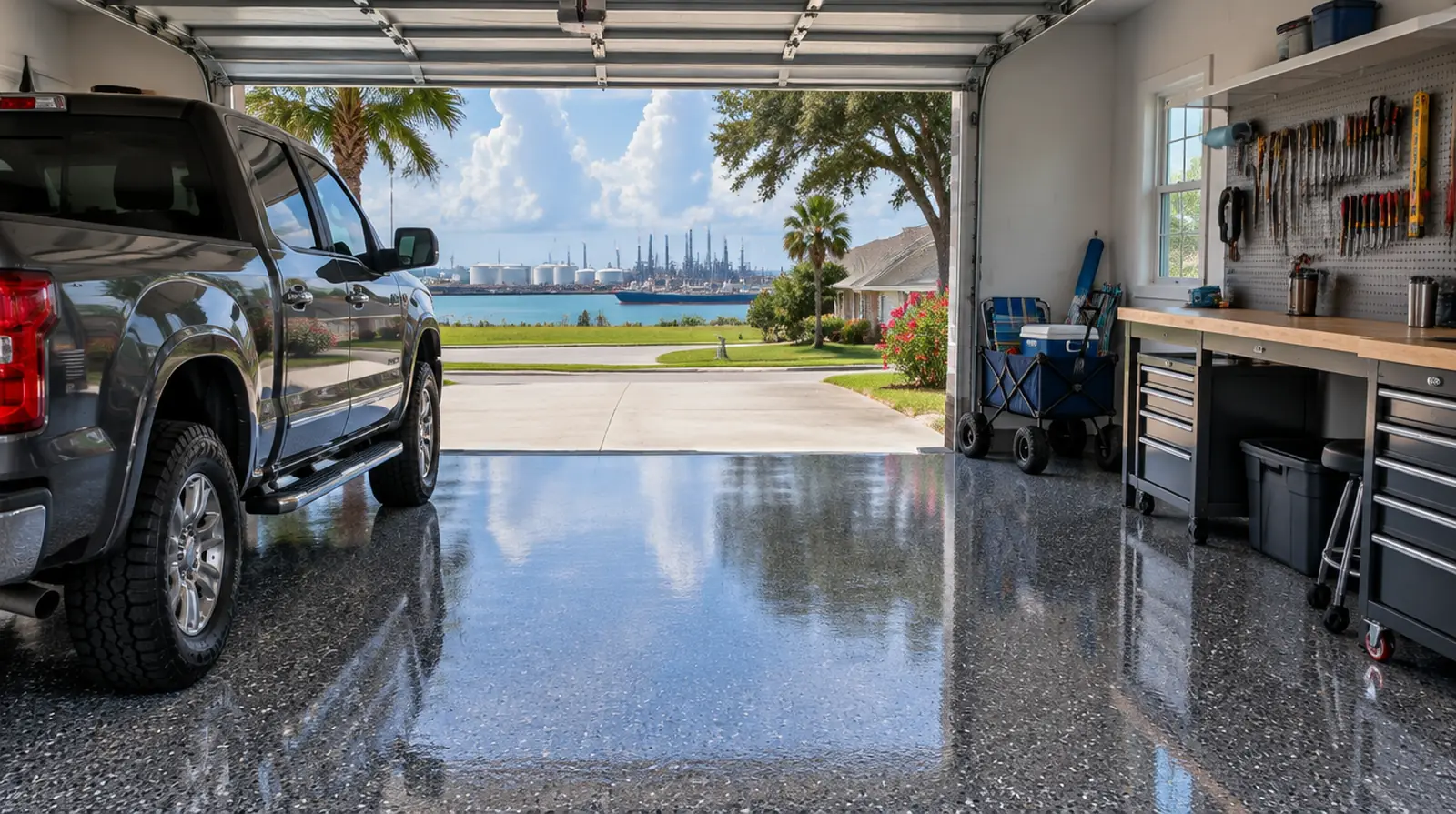
Why bare garage slabs struggle here
Garages near the bay take more abuse than most people realize. Damp ground below the slab feeds moisture into the concrete, so floors sweat on humid mornings and leave chalky white efflorescence along the walls. Sand tracked in from the beach acts like sandpaper. Oil, coolant and brake fluid soak in and stay. Over the years, the top layer of concrete softens and starts to dust, and every sweep seems to produce more grit. Coating the floor stops that cycle and gives you a surface that wipes clean.
Moisture comes first
The number one reason garage coatings fail locally is moisture vapor. Paint and thin kits can look great for a few months, then bubble and lift as vapor pushes from below. Before we quote, we test the slab. If readings are elevated, we specify a moisture-mitigating epoxy primer that blocks vapor and anchors the rest of the system. That single layer is often the difference between a floor that lasts and a floor that peels.
Our installation steps
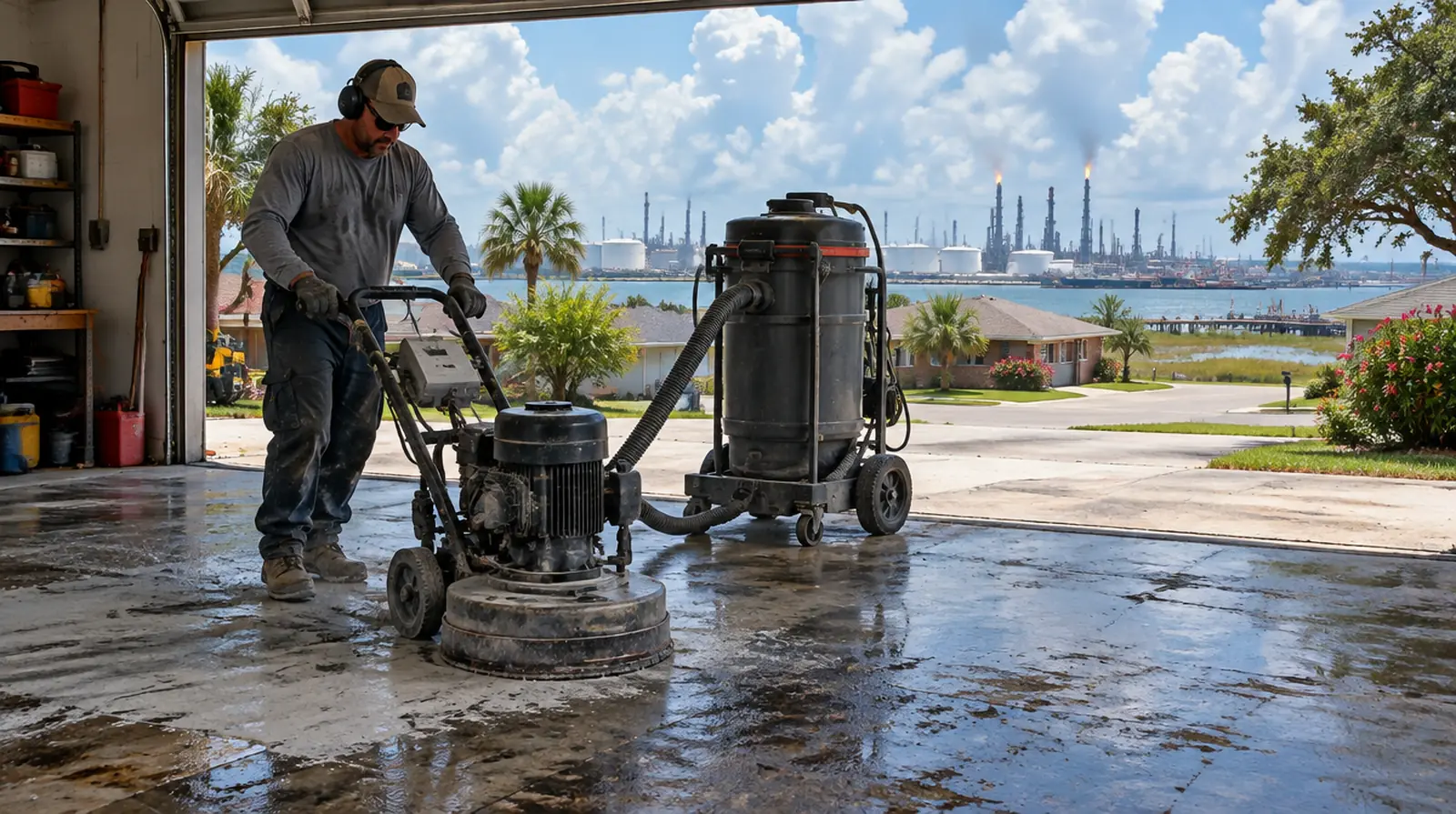
We tape and protect walls, then diamond grind the entire floor with dust collection. Grinding removes old paint, sealers and contamination and opens the pores of the concrete. Cracks and pits are filled and ground flush. We apply the primer, then a pigmented base coat, followed by a full broadcast of decorative flake if you pick that look. Excess flake is scraped and vacuumed, and a clear topcoat seals everything. The finished floor is far thicker than paint and resists oil, gas, salt and most household chemicals.
Hot tire pickup
Tires heat up on summer pavement, and soft or poorly bonded coatings can stick to them and pull away. We use materials rated against hot tire pickup and tell you exactly when it is safe to drive in. Parking too soon is a common mistake, so we put cure times in writing.
Workshops and hobby garages
If you rebuild engines, restore cars or run a small woodworking shop at home, we can add extra build thickness under the workbench and around lifts. Solvent-resistant topcoats handle brake cleaner and degreasers. Lighter base colors make dropped bolts and small parts easy to spot.
Safety underfoot
Coated floors can feel slick when wet. Flake texture and fine anti-slip aggregate in the topcoat add grip without making the floor hard to mop. We tune texture to the space, adding more near entry doors and less where you roll equipment.
Choosing a look
Gray and charcoal blends hide tire marks and grime. Tan and brown blends pair nicely with warm brick homes. Solid colors with a light flake scatter give a cleaner, modern look. We bring large samples so you can compare in your actual garage light, which often looks different from a showroom.
How long it takes
A typical two-car garage takes one to two days. Light foot traffic is fine the next day. Cars usually return after a few days, depending on temperature and the system used. Polyaspartic topcoats shorten that timeline if you need the garage back quickly.
Keeping it clean
Rinse off sand and salt regularly, use a pH-neutral cleaner and a soft mop and squeegee standing water out the door. Put plywood or pads under jack stands and heavy equipment. With simple care, a properly installed floor looks good for many years.
Questions people ask
Can you coat over existing paint? Usually we grind it off so the new system bonds to clean concrete. Will the floor crack? Coatings do not stop structural movement, but we treat existing cracks and can add flexible joint fill so movement does not tear the surface. Is it worth it for a rental? Many landlords say yes because coated garages clean up quickly between tenants.
Get a garage floor quote
Call (409) 916-7381 for a free estimate.